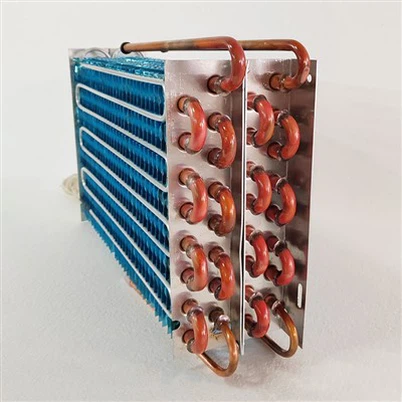


How to dissipate heat from multi-layer wire tube condenser of refrigeration equipment
Leave a message
Heat dissipation
Basic principles
The main function of the multilayer wire tube condenser is to dissipate the heat in the refrigerant to the surrounding environment. The amount of heat dissipated usually depends on the surface area of the condenser, the average surface temperature of the condenser, and the heat transfer coefficient of the air.
Heat dissipation mode
Convection Heat dissipation
The heat in the refrigerant is passed to the inner wall of the condenser tube through convection, and then the heat is transferred to the outer wall of the tube and the heat sink through the heat conduction of the tube wall.
The wind generated by the rotation of the fan circulates in various parts of the condenser, accelerating the process of convective heat dissipation.
Radiation Heat Dissipation
If the temperature of the condenser is high, it will also radiate heat to the surrounding air. This is usually achieved by painting the condenser black, as black absorbs and radiates heat better.
Measures to improve heat dissipation effect
Increase the heat transfer area
Increasing the surface area of the condenser can increase the heat dissipation, thus improving the heat dissipation effect. This can be achieved by increasing the number of layers of the condenser or increasing the size of each layer of the condenser.
Increase air volume
By increasing the number of fans or increasing the speed of fans, the flow rate of the air around the condenser can be increased, thus enhancing the effect of convective heat dissipation.
Cleaning and Maintenance
Regular cleaning of the dust and dirt on the surface of the condenser to keep its surface clean can improve the heat dissipation efficiency.
Periodically check the running status of the condenser to ensure its normal operation and avoid bad heat dissipation caused by faults.