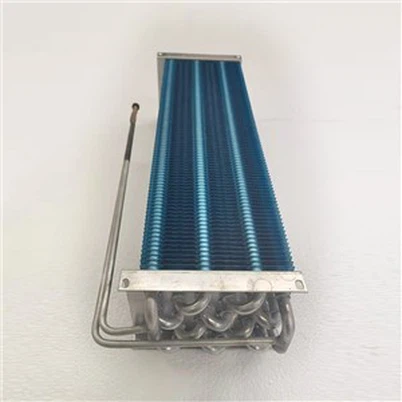


Finned evaporator aluminum fin processing technology
Leave a message
Aluminum fin processing
Material preparation:
Choose the appropriate aluminum alloy material as the raw material of the fin, usually this material is referred to as "aluminum foil".
According to different heat dissipation requirements and equipment size requirements, designers will draw detailed fin drawings, including fin shape, size, number and other parameters.
Fin processing:
Stamping and cutting: the aluminum belt is sent to the high-speed punching machine, and the continuous stamping and cutting of the stamping die is formed to form the predetermined fin shape.
Forming style: In order to improve the heat transfer area and efficiency, the aluminum foil will use different forming styles, such as corrugated type and window type. The window fin is mainly used in the evaporator, which can greatly improve the heat transfer efficiency.
Surface treatment: The surface of the fin will be oxidized to increase the surface hardness and corrosion resistance of the fin. Subsequently, spray or electrophoretic coating can be performed according to customer requirements to improve the durability and overall beauty of the fin.
Connection of fin and evaporation tube:
Row fixing: the fins are arranged on the mold in turn, and the fins are fixed on the aluminum evaporation tube by expanding the tube.
Welding: Resistance welding is used between the copper pipe and the aluminum pipe to ensure the fastness and tightness of the connection.
Evaporator forming:
The aluminum evaporation tube with fin is machined into a winding fin type evaporator with an inlet and outlet circuit.
Leak detection and surface treatment:
Leak detection: Check the air tightness of the aluminum tube loop of the formed finned evaporator, usually by filling the opening at both ends of the evaporation tube loop with air pressure, and placing the entire finned evaporator in the tank to observe whether there are bubbles.
Secondary leak detection: After the initial leak detection, the air tightness of the evaporator is checked again in the same way to ensure the reliability of the evaporator.
Surface treatment: clean the oil and impurities on the surface of the evaporator, and passivate the surface of the evaporator to form a protective film.
Drying and shaping:
Drying: The evaporator is placed in the oven for drying, and the drying temperature and time are set according to the specific process requirements.
Shaping: Finishing the shape of the evaporator to ensure that the appearance of the product is clean and beautiful.
Inspection and packaging:
Quality inspection personnel will check the size, appearance, surface treatment and heat dissipation performance of the fins to ensure that the product meets the quality requirements.
The qualified fins are packed, usually in foam board or carton, to ensure that the fins are not damaged during transportation.