

Data Center: Application of New Evaporative Cooling Air Conditioning System
Leave a message
As global data center capacity continues to expand, energy consumption and thermal management have become critical challenges for operators worldwide. Traditional mechanical cooling systems often require substantial power consumption, leading to high operational costs and increased environmental pressure.
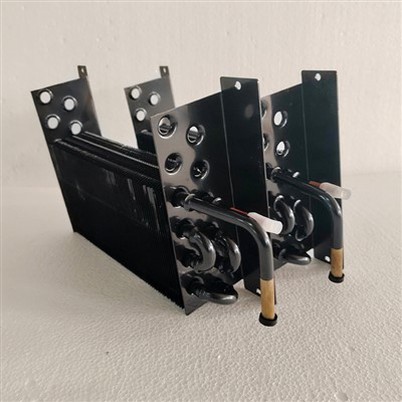
In recent years, evaporative cooling air conditioning systems have emerged as an energy-efficient alternative for modern data centers. By combining advanced heat exchange technology with natural cooling principles, these systems help reduce power usage while maintaining stable operating temperatures for IT equipment.

Air-cooled air conditioners feature the following technical characteristics:
Simple construction and installation. Only refrigerant pipes and power cables are required to connect the indoor and outdoor units, with no need for chilled water pipe laying.
Diversified equipment selection. It comes with a wide range of brands, models and cooling capacities, suitable for computer rooms of various scales.
Convenient maintenance and management. Key components are arranged centrally, enabling easy disassembly and assembly for maintenance without affecting the normal operation of the computer room.
Relatively low energy efficiency ratio. Air has a small specific heat capacity and poor heat transfer performance, and the system COP is generally no more than 3.5.
High noise level. Noise generated by compressors and fans radiates directly into the computer room, making noise reduction and sound insulation difficult.

With the rapid growth of cloud computing, AI processing, and edge computing infrastructure, modern data centers are generating higher thermal loads than ever before. Cooling systems can account for up to 40% of total facility energy consumption, making efficiency optimization a major priority for operators.
With the advantages of high efficiency, energy saving and flexibility, air cooling systems occupy an important position in the thermal management of data centers. Various types of air cooling systems, including constant air volume, variable air volume and indirect evaporative cooling, can be flexibly selected, optimized and integrated according to the scale and climatic conditions of data centers to meet heat dissipation demands in different application scenarios.
The design of an efficient air cooling system requires comprehensive consideration of multiple objectives such as heat dissipation, energy conservation and water resource utilization, as well as the coordinated planning of key elements including air distribution, equipment selection and intelligent control. Adopting new energy-saving technologies such as natural cold source utilization and waste heat recovery, and optimizing system operation strategies can further improve the energy utilization efficiency of air cooling systems.
In the future, with the continuous increase of load density in data centers, higher requirements will be placed on the flexibility and intelligence of air cooling systems. New heat dissipation technologies such as liquid cooling and two-phase cooling are expected to be deeply integrated with air cooling systems to realize precise temperature control. The expanded application of cutting-edge technologies like artificial intelligence and digital twins in air cooling systems will also drive the upgrading and evolution of data center heat dissipation modes, promote green and low-carbon development, and boost the rapid growth of the digital economy.