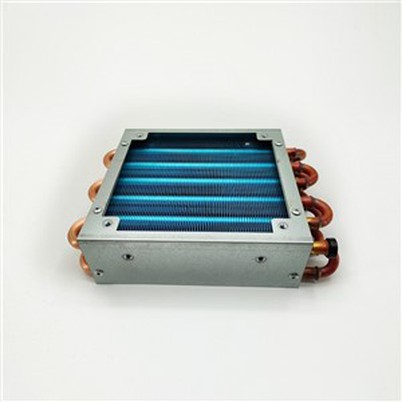


What are the classifications of heat exchangers?
Leave a message
Classification by Application
According to the specific application of heat exchangers in production and daily life, they can be divided into the following categories:
(1) CoolerUsed to cool high-temperature fluids down to the required temperature, such as engine coolers, air coolers, etc.
(2) HeaterUsed to heat low-temperature fluids up to the target temperature, such as boiler economizers, natural gas heaters, etc.
(3) CondenserUsed to condense high-temperature steam into liquid, such as power plant condensers, refrigeration equipment condensers, etc.
(4) EvaporatorUsed to absorb heat and vaporize liquid into steam, such as boiler evaporators, generators of lithium bromide absorption refrigerators, etc.
(5) RegeneratorRecovers heat from high-temperature fluids and transfers it to low-temperature fluids, such as blast furnace hot blast stoves, air preheaters, etc.
Common materials for heat exchangers are mainly divided into two categories: metallic materials and non-metallic materials.
(1) Metallic materials: carbon steel, stainless steel, copper, aluminum, titanium, etc.Among them, carbon steel features low cost and high strength, but poor corrosion resistance. Stainless steel, copper and titanium have excellent corrosion resistance yet come with a relatively higher price. Aluminum has low density and high thermal conductivity, and is mostly used for light and compact equipment.
(2) Non-metallic materials: mainly graphite, polymers and so on.They are corrosion-resistant and lightweight, but have lower strength and thermal conductivity. For example, plastic heat exchangers are suitable for severely corrosive environments.
Heat Exchangers - Advantages of Copper Tube & Aluminum Fin Structure
Copper tube combined with aluminum fin is the most widely used structure for refrigeration and heat exchange heat exchangers.
Copper tube features excellent thermal conductivity, fast heat transfer and stable pressure resistance, which ensures reliable refrigeration performance and good sealing to prevent refrigerant leakage.
Aluminum fin owns light weight, high heat dissipation area and low cost, greatly improving overall heat exchange efficiency while controlling production cost.
This combination balances high heat transfer efficiency, lightweight structure and economic cost, with compact size and wide adaptability. It is widely applied in refrigerators, freezers, air conditioners, dehumidifiers, ice makers and various small commercial refrigeration equipment.