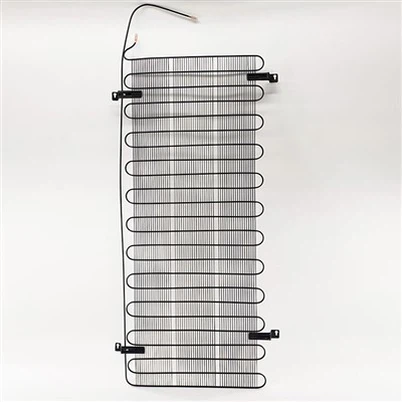


Importance and method of anticorrosion for air-cooled copper tube fin condenser
Leave a message
The air-cooled condenser of split air conditioning unit is installed in outdoor environment. Compared with indoor installation environment, its working conditions are much worse, so it is easy to appear corrosion, dust accumulation and other phenomena, thus reducing the service efficiency and life of air-cooled condenser. Therefore, it is very important to carry out special protection for air-cooled condenser.
The air-cooled condenser used in air conditioning equipment adopts copper tube and aluminum fin heat exchanger. Generally speaking, this heat exchanger itself has good anti-corrosion ability, so it is not too concerned about the corrosion resistance protection. However, this concept needs to be changed. From the three aspects of energy efficiency, equipment life and maintenance cost, it is very necessary to carry out anti-corrosion of air-cooled condenser.
When the condenser is corroded, it will cause the following problems:
1. The surface fouling coefficient increased significantly (the heat transfer performance decreased)
2. Heat transfer material decay 3. Dust is very easy to accumulate (reduce heat transfer performance, reduce air circulation capacity) the final result is: condenser failure, can not be used.
The corrosion rate of condenser is related to the corrosive components, the amount of dust and the content of corrosive impurities in the air in the installation environment, and the air humidity. The relationship between these influencing factors and the corrosion rate is as follows:
1. The higher the dust content in the air, the faster the corrosion speed of the condenser
2. The more corrosive gas in the air, the higher the content, the faster the corrosion rate
3. The higher the air humidity, the faster the corrosion rate
The following benefits can be obtained by anti-corrosion treatment of the condenser:
1. Prolong the service life of condenser
2. Improve the average heat transfer efficiency, thus reducing the operation energy consumption
3. Reduce the workload or cost of condenser maintenance