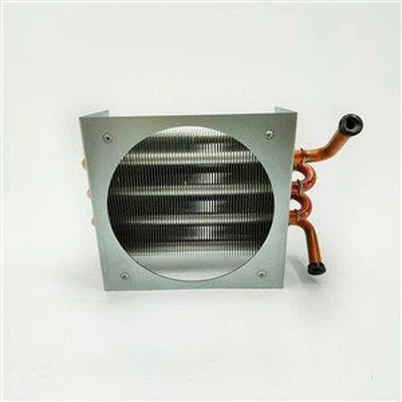


Fault inspection of copper tube fin condenser
Leave a message
Copper tube fin condenser is a common heat exchange device used to transfer heat from the thermal medium to the surrounding environment. The following are the general steps for fault inspection of copper tube fin condenser:
Observe the appearance: Check the appearance of the condenser for obvious deformation, corrosion or damage. If there are any abnormalities, further examination and repair may be required.
Cleaning inspection: Clean the condenser surface to ensure that there is no dust, oil or other debris. These contaminants may affect the cooling effect of the condenser.
Check the cooling fan: Ensure that the cooling fan works normally, and the fan blades should be clean and barrier-free. If the fan is abnormal, you may need to clean or replace it.
Check refrigerant pressure: Use a suitable instrument to test the refrigerant pressure of the condenser and compare it with the specifications provided by the manufacturer. If the pressure is too high or too low, it may mean that there is a problem with the condenser.
Check refrigerant flow: Check the flow of refrigerant in the condenser. If there is a blockage or insufficient flow, the condenser may need to be cleaned or replaced.
Check fins and copper tubes: Check the fins and copper tubes of the condenser for bending, flattening, corrosion, or blockage. These problems will affect the heat dissipation effect of the condenser and need to be repaired or replaced.
Check the connectors: Check the connectors of the condenser, such as bolts, welding points, etc., to ensure that they are securely fastened and are not loose or leaking.
Temperature test: Use an appropriate thermometer or infrared thermometer to measure the difference in inlet and outlet temperature of the condenser. If the temperature difference is abnormally large or small, it may mean that there is a problem with the condenser.
It should be noted that the above steps are only general guidelines, and should be checked and repaired in accordance with the specific equipment and the maintenance manual provided by the manufacturer. For complex faults or more in-depth checks, it is recommended that professional technicians diagnose and repair them.