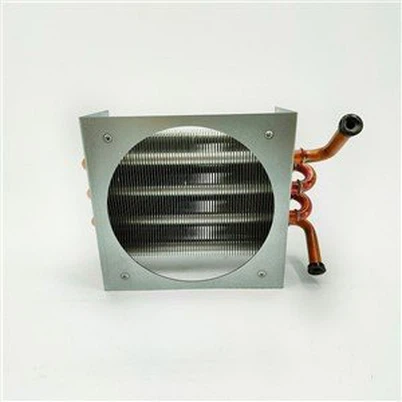


Process Selection And Heating Area Of The Evaporator
Leave a message
The evaporator can be divided into: ordinary multi-effect evaporation system and forced circulation multi-effect evaporator. The forced circulation evaporator is to add an external circulation pump on the basis of multiple external circulation evaporators. Generally speaking, the energy consumption of the double-effect evaporation system with heat pump is similar to that of the three-effect evaporation system, which can increase the flow rate of the material in the evaporation tube, improve the heat transfer effect, and increase the evaporation intensity.
Process selection: When the downstream is operating, the pressure of the after-effect evaporation chamber is lower than that of the previous effect, and the pump power required for the delivery of the solution between the effects is small. In addition, since the evaporation temperature of the after-effect is relatively low, part of the steam will be flashed out after the before-effect solution enters the after-effect, so that the consumption of raw steam is less. However, in the downstream process, the higher the concentration of the aftereffect, the lower the temperature, the higher the viscosity, and the lower the heat transfer rate.
Heating area: The determination of the heating area of the evaporator is made after comprehensive consideration of factors such as material balance, heat balance, heat transfer calculation and the adopted process form.
The reverse operation is opposite to the downstream operation, the pre-effect temperature is high and the concentration is high, and the post-effect temperature will be low and the concentration will be lower, so that the heat transfer rate of each effect is close, but the required power of the feed pump between the effects is large. It also consumes a lot of steam. It is not suitable for processing heat-sensitive materials, nor is it suitable for materials with increased corrosiveness of the medium as temperature and concentration increase. Advection and mixed flow processes can also be used here according to the specific conditions of the materials.