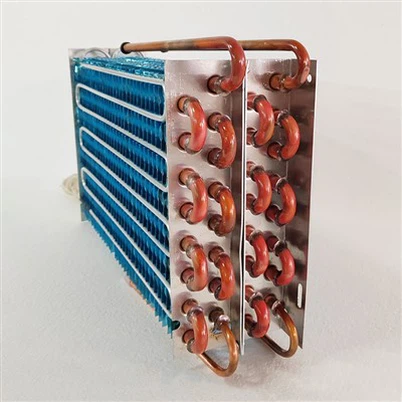


The difference between air-cooled and water-cooled condensers
Leave a message
There are significant differences between air-cooled and water-cooled condensers in many aspects, mainly including the working principle, scope of application and maintenance.
How it works:
The working principle of an air-cooled condenser is that air flows through the condenser through natural or forced convection, transferring heat from a high-temperature gas or steam to the air, so that it is cooled and converted into a liquid. This cooling process is usually achieved by natural or forced convection, where forced convection is through the use of fans or other wind-driven devices to accelerate the flow of air.
The water-cooled condenser uses the Brownian motion and heat conduction principle of water to cool the water through the rubber fixed tube formed in the condensing tube to achieve the purpose of cooling and liquefaction of the condensing medium.
Scope of application:
Air-cooled condenser is usually suitable for use at low temperature and normal temperature, such as cold storage and supermarket cabinet display cabinets.
The water-cooled condenser is suitable for low temperature, high temperature and high pressure, such as high temperature gas condensation, industrial chiller, electronic manufacturing and other fields.
Maintenance:
The maintenance of air-cooled condenser is relatively simple, mainly to regularly clean the dust and debris on the surface of the condenser to ensure smooth air circulation.
The water-cooled condenser needs to check and replace the cooling water regularly, and clean the dirt and impurities inside the condenser to ensure its normal operation.