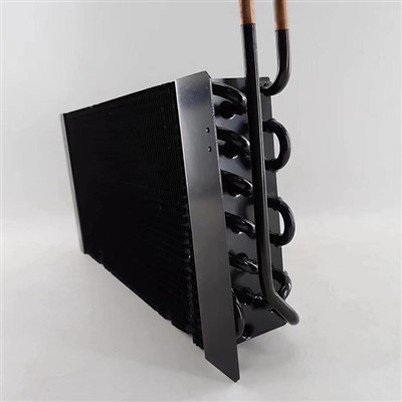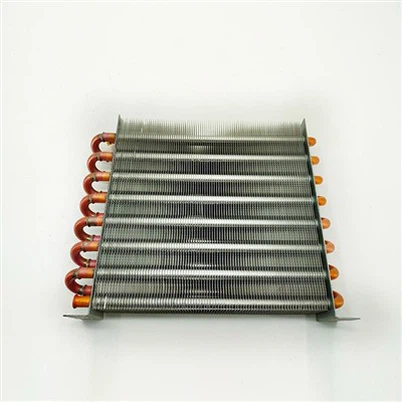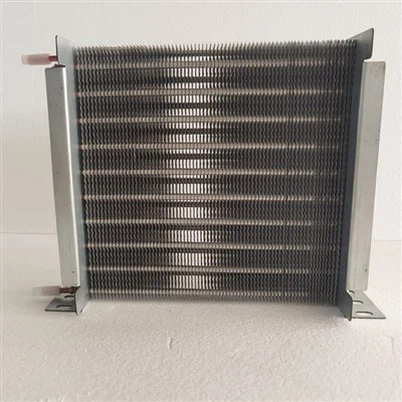


Leakproof test of copper tube finned evaporator
Leave a message
Test method
There are many kinds of leak-proof test methods for copper tube finned evaporator
Handheld electronic leak detector method
Principle: The probe of the electronic leak detector is used to detect the refrigerant leakage in the evaporator pipeline. When the leak detector probe is near the leak point, a warning signal will be issued.
Operation: Turn on the leak detector power switch, adjust the sensitivity of the leak detector, and then test the leak detector probe along the evaporator pipeline.
Features: Simple and easy to operate, but the detection efficiency is low, and there may be missing detection phenomenon.
Helium mass spectrometry leak detection method
Principle: Helium is used as a tracer gas to detect the amount of helium leakage in the evaporator through the helium mass spectrum leak detector, so as to determine whether there is leakage in the evaporator.
Operation: The evaporator is placed in a vacuum tank, helium is filled into the evaporator at a certain pressure, and then the helium mass spectrometer is used to detect the helium concentration in the vacuum tank.
Features: High detection accuracy, strong reliability, but the equipment cost is high.
Vacuum tank helium leak detection method
Principle: Similar to helium mass spectrometry leak detection method, but the evaporator is placed in the empty tank, and the amount of helium leakage in the vacuum box is detected to determine whether the evaporator has leakage.
Operation: The evaporator is placed in a vacuum tank, the vacuum tank is vacuumed, and then a certain pressure of helium is filled into the evaporator, and the pressure change in the vacuum tank is observed, or the helium mass spectrum leak detector is used to detect the helium leak.
Features: High detection efficiency, strong reliability, suitable for mass production testing.
Pneumatic bubble leak detection method
Principle: Fill a certain pressure of gas (such as nitrogen) into the evaporator, and then apply soapy water or other blowing agents outside the evaporator, and observe whether there is a bubble to determine whether the evaporator is leaking.
Operation: After pressurizing the evaporator to a certain pressure, apply soapy water or other blowing agent on the outside of the evaporator to observe whether there are bubbles.
Features: Simple operation, low cost, but the detection accuracy is relatively low.
Hydraulic pressure drop leak detection method
Principle: Fill the evaporator with a certain pressure of liquid (such as water or hydraulic oil), and then observe the change in liquid pressure to determine whether there is leakage in the evaporator.
Operation: After the evaporator is pressurized to a certain pressure, close all valves and interfaces, and observe the pressure change on the pressure gauge.
Features: The detection accuracy is high, but the operation is relatively complex, and it takes a long time to observe the pressure change.