

How does an air-cooled evaporator work
Leave a message
working principle
Air-cooled evaporators absorb heat in the air by using the natural evaporation process of water in the air, so as to achieve the effect of cooling. In this process, water changes from a liquid to a gas, absorbing and carrying away heat from the surrounding environment, causing the ambient temperature to drop.
Detailed workflow
Water spray and evaporation:
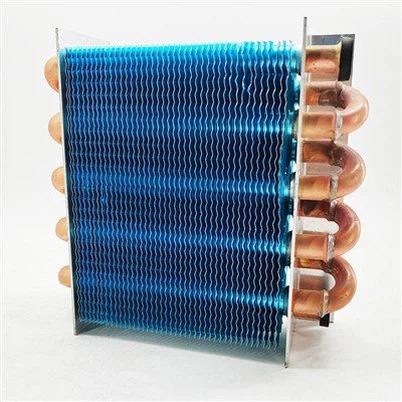
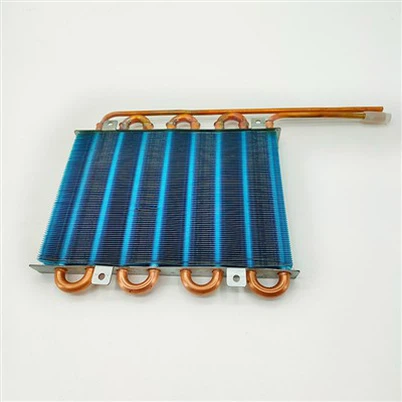
In an air-cooled evaporator, water is sprayed onto the filler of the evaporator. These fillers usually have a large surface area, which helps the water molecules to fully diffuse and absorb in the air.
As air passes through these water-sprayed fillers, the water molecules begin to evaporate, changing from liquid to gas. This evaporation process requires the absorption of heat, which mainly comes from the air, so the temperature of the air is lowered.
Air flow and heat exchange:
The action of a fan or natural wind causes air to flow in the evaporator. When the air flows through the filler, it carries out sufficient heat exchange with the water molecules.
The heat absorbed by the evaporation of water causes the temperature of the air to decrease, while the content of water molecules in the air increases, that is, the humidity of the air increases.
Cooling effect:
The air passing through the evaporator, its temperature has been significantly reduced, and there is a certain humidity. This cooled air can be used for a variety of occasions that require cooling, such as research LABS, offices, and factory workshops.
Advantages:
Operating costs are low as no additional energy consumption is required to drive the cooling process.
No pollution to the environment, as the entire cooling process is based on the principle of natural evaporation.
It can effectively reduce indoor temperature and provide a comfortable working environment.