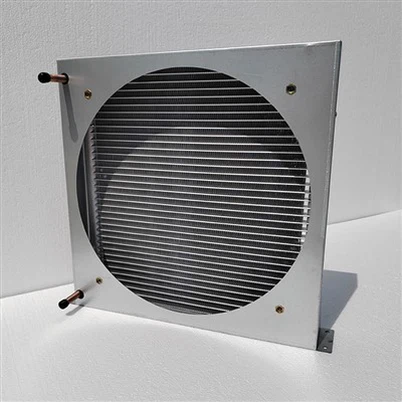


Finned surface cooler and finned radiator difference
Leave a message
Finned surface cooler and finned radiator are two common heat dissipation equipment, which occupy an important position in the cooling and cooling of the industrial field. However, the two devices have important differences in structural design, application scenarios, heat transfer efficiency and so on.
1, structural design: The structure of the finned surface cooler includes a series of parallel pipes and metal fins connected on the pipe. The coolant enters the pipe from a port, flows along the inside of the pipe, and comes into contact with the metal fin. Through the diffusion of metal fins, heat can be rapidly transferred to a larger surface area, improving the efficiency of heat dissipation. At the same time, through convection and conduction mechanisms, heat is effectively removed from the process fluid and dissipated through the ambient air. ; The fin radiator is composed of a series of fins arranged on the substrate, through the convection heat transfer between the fin surface and the air to achieve heat dissipation.
2, application scenario: fin surface cooler is usually used in the industrial field, dealing with large flow, high temperature or high pressure media, widely used in many fields, such as air conditioning systems, refrigeration equipment, refrigeration equipment, chemical processes and other industrial applications that require rapid cooling. Because of its efficient heat exchange capacity and flexible customization, finned surface coolers have been widely used and recognized in industrial production. For example, cooling, heating and distillation in the chemical process, cooling and cooling of nuclear power plants, heating and cooling of soy oil plants, cooling and cooling of steel plants and other fields; Fin radiators are widely used in electronic equipment, automotive engines, air conditioning systems and other fields for heat dissipation and cooling.
3, heat dissipation efficiency: Because the fin radiator uses fins to increase the surface area, which improves the heat dissipation efficiency, so under the same size, the fin radiator usually has higher heat dissipation performance than the surface cooling appliance. However, the finned surface cooler combines the characteristics of the surface cooler and the finned radiator, and has better heat transfer efficiency.
4, maintenance and cleaning: the surface cooler due to the existence of the shell and tube bundle, cleaning and maintenance is relatively complex, need to remove the shell; The fin surface of the fin radiator is prone to ash accumulation, but can be maintained by simple methods such as cleaning or using compressed air.
5, cost: under normal circumstances, fin radiator relative to the surface cooler cost is lower, manufacturing and installation is easier. However, in general, finned surface coolers are more cost-effective in large industrial applications and have been highly respected in recent years.
In general, finned surface coolers are suitable for dealing with large flow and high pressure media, and are widely used in industrial fields. The fin radiator is suitable for the heat dissipation needs of small equipment, such as electronic equipment, automobiles, etc. The selection of the appropriate heat sink needs to consider the specific application scenario, heat dissipation requirements, and cost factors.