

Design principle of air conditioning condenser
Leave a message
Design principle
Design principle of air-cooled condenser
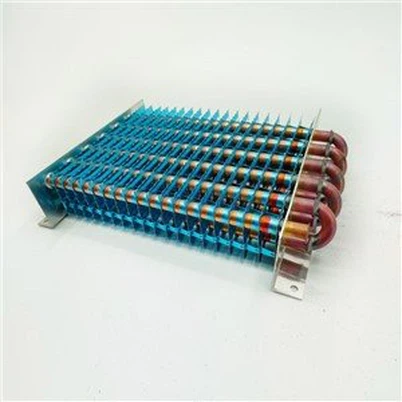
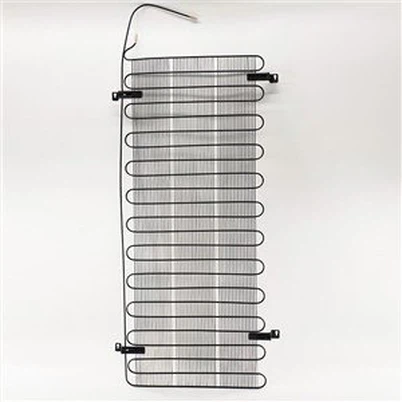
Air-cooled condenser uses air as the cooling medium, refrigerant condenses in the tube, air flows outside the tube, and absorbs the heat released by the refrigerant vapor in the tube. Since the heat transfer coefficient of air is small, fins are often set outside the tube (air side) to strengthen the heat transfer outside the tube.
Key elements of condenser design
Heat transfer efficiency: Improving the heat transfer efficiency of condenser is the key to design. This can be achieved by optimizing the fin structure, increasing the heat transfer area, and strengthening the airflow disturbance on the air side. For example, the use of reinforced fins such as herringbone fins and corrugated fins can significantly improve the heat transfer efficiency.
Material selection: The material selection of the condenser is also very important. It is necessary to select materials with corrosion resistance, high temperature resistance and good thermal conductivity to ensure long-term stable operation of the condenser.
Compact structure: On the premise of meeting the heat transfer efficiency, the condenser should be as compact as possible to reduce the footprint and material consumption. This can be achieved by optimizing the layout of the condenser and reducing unnecessary components.