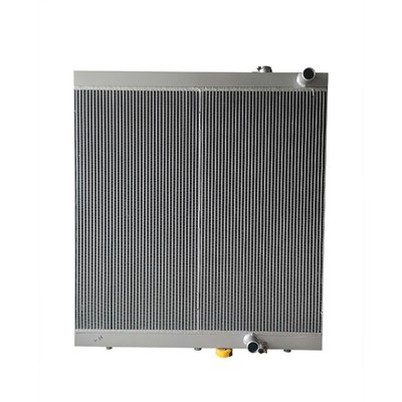


Causes of evaporator fin oxidation
Leave a message
Cause analysis
First, environmental factors
Air quality: In an environment with poor air quality, the surface of the evaporator fin is susceptible to contamination and wear, thus accelerating the oxidation process.
Acid and alkali substances: the air contains more acidic or alkaline substances, which will have a corrosive effect on the aluminum fins, resulting in serious oxidation.
Salt spray environment: In the salt spray environment containing chloride ions (Cl^-), aluminum fins are prone to pitting. This is because chloride ions will destroy the oxide film on the surface of the fin, forming galvanic corrosion and accelerating the oxidation process.
Second, the material problem
Material doping: If the evaporator fin is doped with a higher content of impurities, such as iron, it will increase its oxidation sensitivity.
Surface coating: Poor coating process on the surface of the fin or improper selection of coating materials can also easily lead to fin oxidation. For example, uneven coating thickness, poor adhesion or poor corrosion resistance will reduce the oxidation resistance of the fin.
Third, improper use and maintenance
Moisture residue: After the end of refrigeration, if the moisture on the evaporator fin is not blown dry in time, it will accelerate the oxidation process of the fin. This is because water reacts with oxygen in the air to form oxides.
Lack of cleaning: long-term cleaning or cleaning is not thorough will lead to the accumulation of dust, dirt and other impurities on the surface of the evaporator fin, which will promote the oxidation reaction.
Operating load: Under high load operation of the evaporator, the surface temperature of the fin is high, and it is easy to react with oxygen in the air to accelerate the oxidation process.